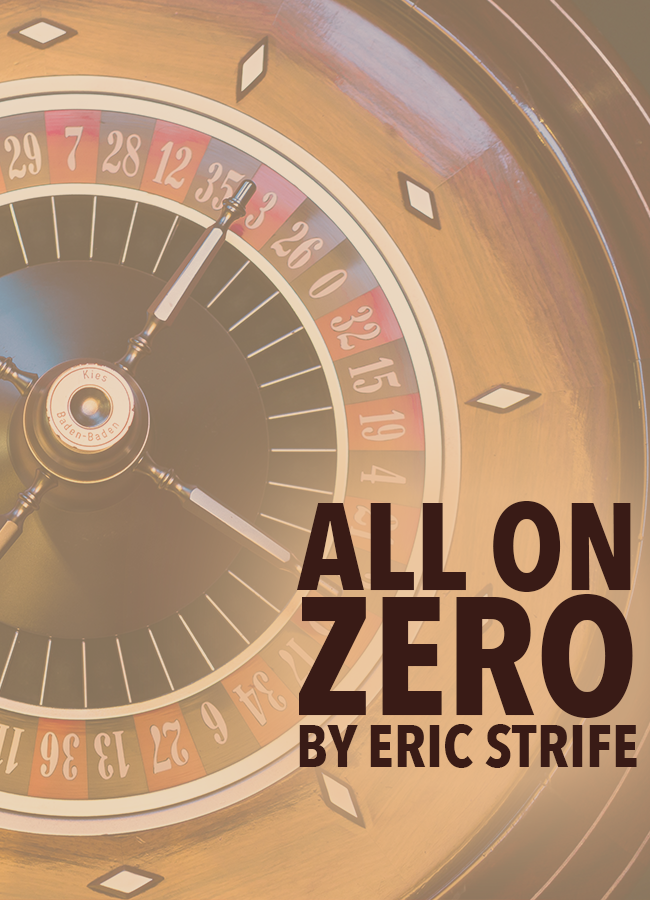
All on Zero

Consider this:

A forty-year-old man places his entire savings on zero. We’re talking all his money from twenty years at the factory, with no kids, and just two short marriages. All on zero.

Yes, on zero.

Now, mathematicians tend to agree that you have a 2.63% chance of winning this bet. This would perhaps be the reason the casino allowed such an outlandishly large bet. Some fat man in a suit was watching this unfold with dollar signs in his eyes.

The payout for this bet was 35 to 1.

Sara

I was walking near the water when I saw her. I had just passed the Boston Harbour Hotel where the great flag drapes, placidly, behind the tourists taking photographs. I had stepped aside to avoid colliding with a grey-haired man staring at his phone and she had appeared, there, in the approaching crowd. It didn’t matter that I hadn’t seen her since we were both children and that I only got a glimpse of her before she walked by; I was sure that it was her. It was the hair that did it, it was that same dirty-blond cascade falling down her neck. She seemed hurried and by the time I thought of opening my mouth, of saying something, she had passed me by. I should have caught up with her then, should have run a little and tapped her on the shoulder, but then what would I have said? What would we have done?

I’ll be leaving this city in a couple of days anyway and my life feels complete the way it is.

Ice Cream or Moxie

In the heat of the summer, back when Willow’s mother slipped in and out of lunacy, sometimes she’d wake up at night to find her sitting on the edge of her bed. She’d whisper, “I’m in the mood for something sweet. Let’s walk to Mulberry’s. It’s a good night for ice cream.”

Willow would search her eyes. If they seemed contented, she would slide out of bed and allow herself to be pulled out into the dark.

Mulberry’s was a hike, but electric energy buzzed through her mother as they walked along. It felt like carnival rides and fireworks. Like parades and Christmas. The feeling was catching. It felt like she could walk until dawn without getting tired.

All at once, Willow wanted to skip and run! She wanted to laugh out loud and dance around, but didn’t. Instead, she stayed silent, letting the humid air wrap around her shoulders, while her mother gushed on and on about the things they were going do that summer.

Hope

It always rained on the TV when there was a funeral. But not in real life, not on that day, the first day of the darkest days of his life.

The sun shone bright as diamonds forcing the handful of grownups present to don their sunglasses and search for shade in the stark dust ridden cemetery. It burned down on his head, mocking him with fake happiness.

Six-year-old Toby Mikkleson stood alone beside the large hole which cradled the wooden box inside which his mother lay. Summer gusts sprinkled red sand on his well-worn trainers and blew even more up his nose. Tears ran streaks down his chubby little cheeks and his belly ached with loneliness.

Behind him stood the lady who had brought him from the children’s home. She was tall and cold. Cold like Mamma’s hand when he’d held it that night. He remembered her eyes as their light faded taking any hope of a good life with it.

The Phonecall

Karen whistled while she washed the dishes. The day was warm and sunny, and peace reigned at Parkland Drive where she lived alone. She smiled. She hadn’t felt this relaxed since she had become sole inhabitant of her home six months earlier, when she had finally sent away her only son, and her husband, yet on different paths. It had been a traumatic affair, but necessary. Now, she could enjoy early retirement from the healthy life insurance she had recently collected.

She thought about pouring herself another glass of Chardonnay when the phone rang.

“Hello?”

Silence.

Foreign Flight

Ahmed glanced up as yet another person opened the overhead compartment. He told himself to not worry, that they weren’t going through his bag. Even several hours into the flight, his eyes still couldn’t help but dart glances at the middle-aged woman rummaging in the compartment. Only by tapping on his knee was he able to keep himself from jumping up and pushing her away. He hated being separated from his bag. The eternity spent waiting for it to come out of the security machine had been bad enough, but leaving it where anyone could go through it was more than he could bear! His finger tapped faster and faster with each passing moment.

At first he’d tried to force it under the seat in front of him. When that was not going to work, he’d tried to just hold it in his lap. “All luggage must be stowed,” a flight attendant had said, but Ahmed didn’t understand. After hand motions also failed, the flight attendant had wrestled the bag from him and forced it into the overhead compartment. All these people paid to be here . . . none care what’s in my bag, he reminded himself again. The lessons he’d learned in the camp over the last year and seven months had taught him otherwise, though. He clenched his jaw until it throbbed at the thought of losing any more.

This Happened in Vegas

Maybe it was curiosity. Maybe it was boredom. Maybe it was an experiment. Or maybe I was actually feeling lustful.

Naw, it couldn’t have been that.

Snap, snap, snap went the little cards as the short man slapped them against each other. He wore a black baseball cap with no logo on it, a large green T-shirt, and baggy pants. He stood on the corner of an intersection aggressively handing his cards, one by one, to the drunken passersby. Most of them either ignored him or grabbed the proffered card and immediately let it fall to the sidewalk. For this reason the sidewalk around the man with the cards was very nearly papered over.

We Don’t Talk to Tim

Walt brought home a rooster today. He just brought it home, carrying it under his arm, all red-feathery with its dinosaur feet.

“Oh God,” said Linda from the table. “Oh God, Walt, take it away.” She lit a cigarette. “Birds make me shudder.”

Walt put the rooster on the table in front of Linda, set it down on its dinosaur feet. Cluck, it said. Linda shuddered and blew smoke at the rooster. “Oh God, Walt, I simply can’t handle a bird.” Linda was dressed head-to-toe in black. Linda is usually in anguish.

Walt said, “It’s a fine-looking rooster, it is.” It was a fine-looking rooster. “It is,” I said. We stood by the table and admired the red-feathery rooster. Linda shuddered.

Casualty of Coincidence

The red Honda Accord closed in on Keith Swanson’s white BMW. Keith’s heart raced as his eyes shifted from side to side searching for any free space on the semi-crowded road. His life had become a Fast and Furious movie, except he didn’t know what the outcome would be. Where’s the police when you need them? Any other time, they would be everywhere, but now … nothing. That wasn’t the case when he got into an accident with that same Honda weeks ago. That particular day was seared into memory. It was that text message he received that day which started everything.

Fallujah

Beth looked up at the second floor windows of the abandoned house and then over her shoulder at the empty dirt road, as Gene pushed through the tall, yellowing grass and stepped onto an overgrown brick path that lead to the porch. She followed him. Ribbons of sunlight ran through the porch’s ornate trim, and crickets sang from every direction. They were far from the main road, and there was not another house in sight, although in the distance she could see the spire of a church poking out from the tops of the auburn trees.

“You know Sadie’s pregnant?”

“Oh?” Gene climbed the porch steps and peered through the remnants of a shattered window into an empty little side room.

“She’s due in April. I ran into her and Kevin yesterday at a yard sale. Caught them checking out the baby stuff.”

First Order

I walk into Starbucks at 7 am, starving after a nineteen-hour flight from Mirpur to Boston. As I pass through the golden doors that magically open as I step close, I am surprised by the casual ambience of the coffee shop. Men with unshaven beards, dressed in tshirts and pyjamas with flip flops stand in a queue. A few women are wearing makeup, heels and freshly ironed dresses. They glance from the counter to their watch, from their watch to their phone, shifting on their toes, eager to grab a coffee and rush to the urgent tasks that await them. There are numerous people in workout clothes, sweaty but energetic, eager to embrace the day. I struggle to grasp their lack of concern for dressing up sharply before leaving the house. Then I line up behind a man who seems to have forgotten how to shave a decade ago. He taps his foot on the wooden floor and hums along the rhythm of the music blaring through his headphones. He is wearing grey trousers and seems to have rolled right out of bed into Starbucks. I wonder if he realize he’s outside. People are watching, I have an urge to tell him. He smiles, I nervously grin and lower my gaze as if someone just caught me shoplifting. Don’t stare, I remind myself. A few steps ahead of him is a teenage girl with curly black hair that rest just above her shoulders. She is wearing a red tank top and her arms are covered in tattoos. I struggle to make out what the tattoo. My eyes are fixed on her arms. Don’t stare, don’t stare, I remind myself before looking away.

Moral Fiber

Thank you for taking my question, General. General! I heard you were disciplined, but they didn’t take away your title. Once a general always a general. They let you keep your title no matter the offense. You’d think they’d remove the title, so history books wouldn’t be filled with crooks, but no: an impeached president, or a president who resigns in disgrace, is a president for life and posterity. They let you keep your title because title equals benefits, so regardless of how profoundly you betrayed your oath of office, and no matter how you abused the public trust, we—we the citizens—will be covering your generous health insurance, and providing you with a cushy pension for life. I wonder how does it feel to be addressed as “General” when you know full well you have no troops to command, nor will you ever have any—okay, never say never, and it’s entirely possible that your friends will make you a front man for a think tank, but an active general? Never again. There are no second acts in the army, so that’s where my question begins.

The Blue Bird

Once upon a time, a drab bird lived a dull existence. At long winter’s end, he and his mopey wife both felt weak and tired. Eventually the sun climbed higher in the spring sky.

“Guess it’s time to start a family,” she chirped, despite her exhaustion.

“I’ll collect twigs for a larger nest,” he replied.

Both were resigned to the task and outcome without understanding why. He toiled away making preparations. Responsibly, he put seeds on the table. She completed her share of tedious chores feathering the nest.

Tango-19

The sky went black, as black as the stealthy double hull of her ship, Tango-19, on this, her last mission.

Commander Meredith Conrad eased her ship over the lip of the small planet, one of a cluster now called The Outer Rim. She had seen much in her sixteen years in space, but had never gotten over the sheer terror of Deep Space darkness. The human spirit, she now knew for certain, needs to see something in the night sky.

She was, at least technically, still mostly human, so she let the thought linger. It may have been no more than the ghost of some ancient memory of the brilliant night sky her ancestors had once known—a wondrous display that held for them nothing but promise, until the day the skies forever turned angry, and the rains began.

Chasing Shadows

You saw me just as you were about to unlock your car. You had perched your coffee cup and a paper bag containing a pastry or a donut from Ray’s Diner on the roof, and you looked up, right at me, as I made my way towards you. You’ve changed, of course, over the past few years. Your hair more salt than pepper, the open pores on your face so wide it’s a wonder that yesterday’s stubble doesn’t just fall out. Broken veins punctuate your cheeks and nose. Your lips, dry and cracked with small white pasty deposits at the corners, are pursed. The deep lines that frame your features couple with the yellows of your eyes to give an impression of tiredness, of stress, of unease. That made me smile.

You didn’t expect to see me, did you? After standing completely still for several seconds, you gasped, and if fear had a sound, that’s what you made. I stopped and I looked at you, took in the full view from your thinning hair to your flaccid belly overhanging where presumably you have a belt line, and down to your ancient boots. I remember those boots. I remember they smelled of musk and leather and plastic all at once. Their dark brown skin was smooth and the metal lace hole surrounds gleamed with pride. Now they are dappled with small abrasions, a triangular shaped stain blackens the front of the left, and the laces are stretched and exhausted.

Blackout

Her heart pounds in her throat. Beads of sweat race down the small of her back. Her eyes prickle with something she refuses to call tears.

She jogs down the brightly lit hallway, dodging families huddled together, nurses pushing carts and empty gurneys, towards the two men that stand near a window, shoulders slumped, clothing rumpled. Her eyelids are heavy and she can almost feel the bags under her eyes, but the voice of her lieutenant, the balding man that now stands fifteen yards from her, rings in her head.

You should get down to the hospital.

It’s serious, Marissa.

It’s serious.

Potential

Emma checked her appearance in the mirror one last time. She was unsure about the outfit she had chosen, but it was too late to change for the umpteenth time. Damn, she thought, looking at the large pile of discarded clothes on the bed before turning back to the mirror, is this too casual? Fashion was definitely not her forte.

Actually, anything that involved interacting with other people was not her forte. Painfully introverted since childhood, it was a wonder that she had even been asked out on a date. More like a fluke, actually. If she hadn’t literally crashed into Rick, she would have never met him. Hurrying around a corner, avoiding eye contact with other people, neither of them had seen the other in time to stop. They had both ended up on the ground, books and papers scattered around them.

They had both also immediately apologized to one another, profusely, in unison. It was pretty funny, really, and both of them had laughed as Rick offered his hand to help Emma up. It made Emma smile even now, just thinking about it. Rick was quirky, but cute, and she was both terrified and excited that he had asked to hang out with her after their initial and literal “bumping into each other.”
Difficulty Breathing

I’ve experienced difficulty breathing for 75 days. At approximately 10 o’clock in the evening, anxiety, shortness of breath, and headache were initial symptoms. Subsequently, onset of panic and agitation, mild shaking tremors, and fearfulness manifest as discomfort in the pit of the stomach and hollow rumblings in the intestines. Diarrhea accompanied with insomnia developed within 24 hours. My first self-medication consisted of two Pepto-Bismol tablets taken with 10-12 ounces of water after each of six eliminations of increasingly loose stool. I remained bedridden and close to the toilet. Sore throat and mild fever of 100 F followed within 48 hours, at which time I began a regimen of two extra-strength Tylenol caplets three times a day. Onset of sinus pressure, sneezing and post-nasal drip occurred within 72 hours.

The Living

The first thing you notice in a car crash is the sound.

The shriek of metal grinding against a bulletproof blackboard as tall as a skyscraper. The ricocheting gunshot of the airbag and the swelling static, a din similar to a particularly overzealous fire alarm. The inundating whoosh that sweeps you away before you know what you hit, like being submerged in the Pacific without a raft.

You can’t swim to the water’s surface and breathe the briny ocean air until the tires stop squealing and the engine stops bumbling.

You find yourself enduring something akin to a cluster headache, crunching on glass crackers bitter from the regurgitated coffee you drank at lunch. For a moment, you aren’t sure how those little shards ended up in the cavity where you stick your food, until you glance at the sheer-white windshield, the ripples of glass spreading like the tendrils of a spider web.

Off to the side, you see something move. Twitch, more likely. You turn your head.

Grip

Pawn Quixote, another roadside museum of miscellany, stands open. It’s a still life of eye-level guns and stacks of electronics and a surplus of leather hats and belts. Somewhere unseen, a turntable scratches its bluesy hymn. The entire west wall, a dedicated guitar showcase, entices no one.

The kid enters carrying a handsome leather case underarm. Hoodie up, he catches himself in the convex eyes of markdown television sets, headphones fastening his neck, and turns away. Ahead, the owner waves him to the counter, framed by ceiling-high shelves of cassettes and CDs. They are alone.

“Afternoon.” The man extends a hand—long fingers, gray hair, bad tremor. “I’m Jack.”

The kid shakes it, winces. He matches Jack’s firmness, but the owner redoubles before letting go. “Caleb,” says the kid. “I’m here to sell a guitar.”

Gunderstanding

A screen above my gate told me my flight from Texas to New York was ON TIME. Another screen turned to CNN alerted me to BREAKING NEWS that another lone wolf shooter had gunned down a dozen people near a small college in Vermont. The only thing about those two facts that amused me was the use of ALL CAPS for good news and bad.

Over the past few days I’d learned that making people laugh in Texas is as much fun as making people laugh in Florida or Maine or Tennessee or other states. Just two years earlier, I’ll mention since I’m catching you up on things, my brother Jake bet me $500 that I wouldn’t take a shot at doing stand-up comedy. I took him up on it not because I needed the $500, but because I love a challenge, and because I needed the $500.

My life became a series of moments when I was either collecting material or rejecting material for my stand-up routine, a pattern I’d accepted as philosophically sound. Was something funny or not funny? I tried, in every trying moment of my day, to discern things as being either the moon against the night sky or just the night sky against the night sky. The moon always reveals something.

Between Sees

I know my mom’s secret hiding places. All of ’em.

I found the first one by accident, when Ronnie and I were playing hide and seek and I tried to hide in my parents’ closet and knocked over the jar of coins. When Ronnie found me, we headed to Loaf ‘N Jug and mom never suspected anything because I know better than to take too much, just enough to buy a bag of sour skittles and pop, or something like that. You can’t get too greedy or you’ll get caught. I learned that from Ronnie. When he took over five dollars from his parents his dad grounded him for a week.

Ronnie’s dad is pretty strict, but he also has fun and takes Ronnie on vacations. They invited me to go with them to Florida this year but my parents said I couldn’t go because his parents are a bad influence because they don’t go to church. I wish my parents would take me to Florida and not church . . . I also wish I didn’t have to do Saturday morning chores. I hate cleaning the kitchen. Probably not as much as I hate stacking the firewood in the garage, but still, I hate it. Even if it does build character.

In It For The Long Haul For The Haul

We had been walking for a while, chatting about nothing, well, not exactly nothing, so much was going on, we were just skirting around it all. Ben would go in and out of rapping random songs when we found ourselves in silence; it was hard not to join in when he did that. There was a feeling in the world, a feeling as we were walking, a feeling on that road, something was off. I couldn’t pinpoint it, but Ben could, “It feels pre-war,” he said, tying a knot in the drawstring of his hoodie. “I was just thinking something like that,” I had to say that, or else he wouldn’t think I was thinking something like that. “So what do you think’s gonna happen?” I asked him, I eased it out, I had to say it in that way, or else he wouldn’t have answered. Ben is this insane kid, in the best way. He is this tiny, Asian guy with glasses too big for his face, and he’s all face. He’s also all knowledge; I swear I’ve never heard someone say so many truths as Ben says. “Strength, mass amounts of strength,” he offered smoothly. I thought on that as Ben pulled out a verse of Gangsta’s Paradise. “Will it make a difference?” I had too much emotion in my voice here, but I thought he would let it slide; he did. “One day. And that’s all we’ve got, is one day.” He kicked a couple rocks off the road, “When the world is unsettled, the magic will appear.”

Storm Cloud

“She’s not even listening,” I say.

“She is,” he says.

“I am,” she says.

I feel my sadness sink deeper into the room’s obligatory sofa, the unbearable weight of our truth anchoring her and I to the stink of these threadbare cushions. I am going to lose her here. After ten years. Here in the stench of thick, stale air and that rotted flower pot shoved into the dusty window frame. Where academic books stack lazily on untouched shelves and a terrarium dangles crookedly from a rusted brass chain in the corner. Here, where tension hangs in a storm cloud over all our heads, threatening to rain.

Jumping

The glass was slippery in his hand, the amber liquid sloshing around made the condensation dense and troublesome. Dave didn’t bother with the stale brown pieces of scrap Mikey brought with him. The napkins shouldn’t pass as napkins. Anything from the gas station on the corner of Manson and Manson was just a poor imitation of something better. The linen would stick to the wet bottle, get soggy and tear, make his hand an even bigger mess than what it was.

“Would I die?” he asked Mikey, getting the drink off his mind despite it flooding every wrinkle of his hand. Both men glanced over the roof’s edge. There was a five-inch barrier outlining the buildings perimeter. The two men stood just a step away.

“Probably.” Mikey took another swallow of his own brown bottle. “That’s cement down there.”

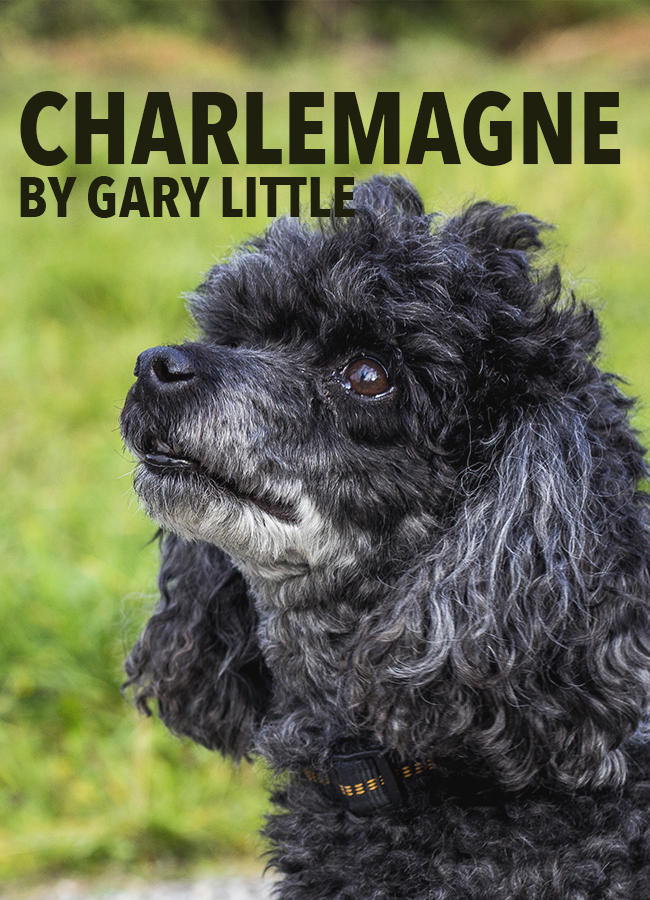
Charlemagne

“I ain’t got no stinking bookshelves,” sang the curmudgeon in an off-key baritone, as he opened the refrigerator to see what was for breakfast. Standing there with the refrigerator blowing cold air up his pajama shorts and chilling his nether regions, Charles “Chuck” Magnus pondered the possibilities.

“Ok, no pizza. I had that for lunch yesterday. So . . . milk?” he mumbled to himself.

He shook the milk carton, heard it was nearly empty, opened it and sniffed. Wrinkling his nose he said, “Ugh . . . no milk.” That eliminated cereal. He dumped the odious liquid into the sink, ran water and threw the empty in the trash. Leftovers? Yeah, last night’s meatloaf and the roasted Irish potatoes. “A breakfast fit for a curmudgeon,” Chuck mumbled and shoved the afore mentioned items into the microwave.

The Most Powerful Man in the World

“I can’t do this.”

“What do you mean? Sure you can.”

“No, I can’t.”

“Well, why the hell not? You’ve been working just as hard as that guy. Sure, he used some savvy—”

“A hell of a lot of savvy.”

“A hell of a lot of savvy. His wits, charisma, and, apparently, kindness brought him all these riches.”

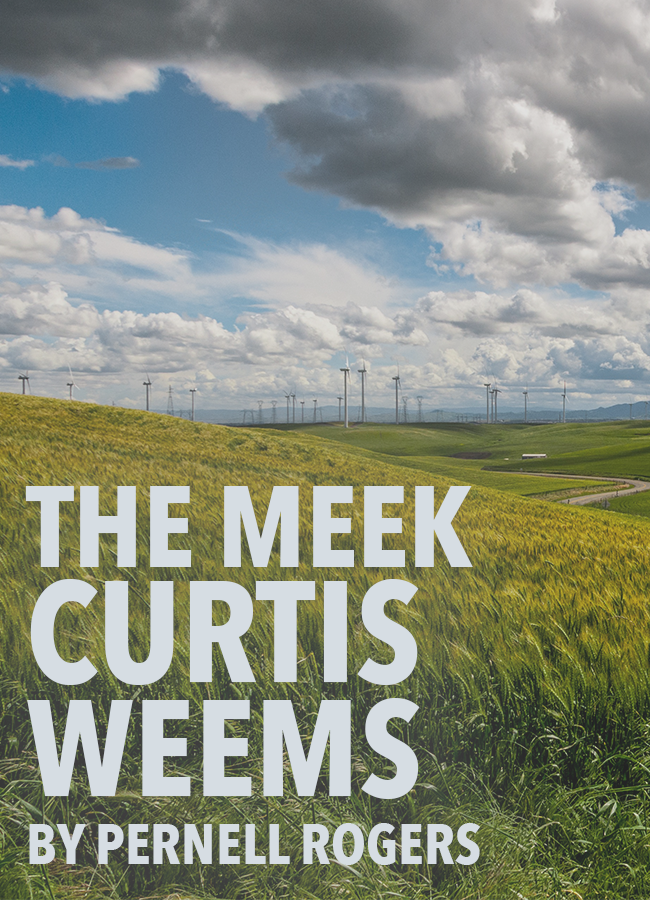
 The Meek Curtis Weems

Curtis Weems was a quiet, sensitive twenty-six-year-old man with a secret. He lived in a very modest one bedroom, one bathroom house on the outskirts of Arnold, Nebraska and found it difficult to keep a job. Not because of his attitude or character flaws. Instead, it was his meek personality. His overt shyness and unwillingness to stand up for himself opened him up to torrents of teasing on most of the jobs he took. It was his meekness that made him endearing to those in the community that knew him. Nevertheless, he tended to keep to himself most of the time.

When Curtis awoke one spring morning, getting out of bed seemed to be a waste of time. He had something to do today, and he was sure it would be useless.

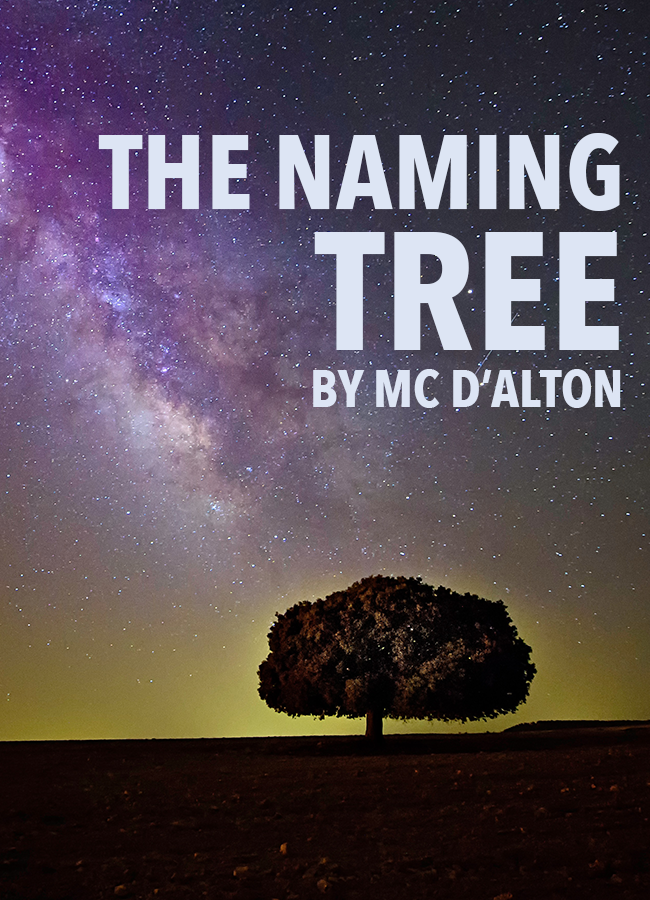
The Naming Tree

The heavens give way to indigo and orange at the edge of the world. Their dim glow announcing a new day and calls to the hornbill and the Zebra. The bush stirs and the mighty lion yawns loud and true.

A soft breeze picks up carrying on its wings a melody. A tune heard only by the chosen one. It is the song of the Naming Tree and it beckons to a heart.

New Girl—1963

I still remember her first day in Grade 10 French. We all stared at her, unaware of our rudeness, unmindful of her discomfort. We always stared at anyone new. Under our gaze, she grew awkward, her pink cheeks turning scarlet. That high, Scottish colouring could deepen but not disappear. She would never need blusher.

Mrs. French Class introduced her as Linda Cairn, and she took a seat near the front, two rows over from me. Outside, the fall winds threw rain at the glass, and eyes that had followed Linda to her desk now swiveled back.